Crosswise

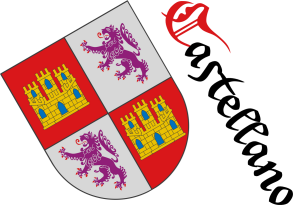
Cavalry Regiment Alcantara, Laureate of Saint Ferdinand

Grand Laureate Cross of Saint Ferdinand.
Argent, a cross of Alcantara. Crest: A closed royal crown Or, with eight arches, visible five. Behind the shield the Laureate Grand Cross of Saint Ferdinand. Motto: «Hoec nubila tollunt obstantia sicut sol».
Escudo de plata, una cruz de Alcántara. Timbrado de una corona real cerrada. Acolada detrás del escudo la gran cruz laureada de San Fernando. Lema: «Hoec nubila tollunt obstantia sicut sol».
Coat of arms interpreted in the following manner: the shape of the shield is of a semicircular arch; the field is illuminated in metal Argent; the cross of Alcantara, the 4 swords and the 2 laurel branches are outlined in Sable and illuminated in Vert and Gules; the royal crown is closed, outlined in Sable and illuminated with the metal Or, Argent for the pearls, Azure and Or for the orb, Gules and Vert for the gems, Gules for the inner cloth, and Sable for the visible hollow at its base; and the whole has a iridescent finish.
Rif War, July 23, 1921, banks of the Igan River, North Africa
The Alcantara Regiment executed nine successive cavalry charges to protect the infantry's retreat, nine charges until they broke the enemy lines, outnumbering them. The last charge was on foot because all their horses were dead or exhausted. These heroic riders of Alcantara had fulfilled their duty of protecting the wounded infantry in their retreat to El Batel, but the price was appalling: of 691 riders, only 67 survived, and three months were necessary to recover hundreds of corpses.
For this reason, in 2012, the Alcántara Regiment was collectively awarded the Grand Laureate Cross of Saint Ferdinand.
Two lances behind the shield
Since 1987, the coat of arms of the cavalry regiments of the Spanish Army must carry two crossed lances accolade behind the shield. And indeed, this coat of arms of the Alcántara Cavalry Regiment has two lances behind the shield, but in my artistic heraldic interpretation, I did not paint them to avoid detracting from the prominence of the Laureate Cross.
Blazon keywords: Without divisions, Argent, Cross of Alcantara, Cross couped, Cross, Crest, Closed royal crown, Crown, Behind the shield, Four, Sword, Crosswise, Gules, Two, Branch, Laurel, Vert and Motto.
Style keywords: Semi-circular, Illuminated, Outlined in sable and Iridescent.
Classification: Interpreted, Military, Army and Navy and Coat of arms.
Bearer: Alcantara, Cavalry Regiment.

Charles V, Holy Roman Emperor
![Party per fess: 1 party per pale: 1 quarterly: 1 and 4 Gules, a castle triple-towered Or, port and windows Azure, masoned Sable [for Castile]; 2 and 3 Argent, a lion rampant Purpure, armed and langued Gules, crowned Or [for Leon]. 2 quarterly: 1 Or, four pallets Gules [for Aragon]; 2 quarterly per saltire: 1 and 4 Or, four pallets Gules; 2 and 3 Argent, an eagle displayed Sable [for Aragon-Sicily]. 3 Argent, a cross potent cantoned of four crosslets Or [for Jerusalem]. 4 Gules, a chain orlewise, crosswise, and saltirewise Or, charged in the fess point with an emerald Vert [for Navarre]. Enté en point Argent, a pomegranate proper, seeded Gules, slipped and leaved Vert [for Granada]. 2 quarterly: 1 Gules, a fess Argent [for Austria]; 2 Azure semé of fleurs de lis Or within a bordure compony Argent and Gules [for Burgundy modern]; 3 bendy Or and Azure within a bordure Gules [for Burgundy ancient]; 4 Sable, a lion rampant Or, armed and langued Gules [for Brabant]; overall an inescutcheon party per pale: 1 Or, a lion rampant Sable, armed and langued Gules [for Flanders]; 2 Argent, an eagle displayed Gules, crowned, armed, beaked, langued and membered Or, charged on the wings with two trefoiled stems Or [for Tyrol].](../escudo_heraldico/_detalle.htm?img=CarlosV.22.Escudo.Metal.Avr25.jpg&cla=Diestro "Charles V, Holy Roman Emperor")
Party per fess: 1 party per pale: 1 quarterly: 1 and 4 Gules, a castle triple-towered Or, port and windows Azure, masoned Sable [for Castile]; 2 and 3 Argent, a lion rampant Purpure, armed and langued Gules, crowned Or [for Leon]. 2 quarterly: 1 Or, four pallets Gules [for Aragon]; 2 quarterly per saltire: 1 and 4 Or, four pallets Gules; 2 and 3 Argent, an eagle displayed Sable [for Aragon-Sicily]. 3 Argent, a cross potent cantoned of four crosslets Or [for Jerusalem]. 4 Gules, a chain orlewise, crosswise, and saltirewise Or, charged in the fess point with an emerald Vert [for Navarre]. Enté en point Argent, a pomegranate proper, seeded Gules, slipped and leaved Vert [for Granada]. 2 quarterly: 1 Gules, a fess Argent [for Austria]; 2 Azure semé of fleurs de lis Or within a bordure compony Argent and Gules [for Burgundy modern]; 3 bendy Or and Azure within a bordure Gules [for Burgundy ancient]; 4 Sable, a lion rampant Or, armed and langued Gules [for Brabant]; overall an inescutcheon party per pale: 1 Or, a lion rampant Sable, armed and langued Gules [for Flanders]; 2 Argent, an eagle displayed Gules, crowned, armed, beaked, langued and membered Or, charged on the wings with two trefoiled stems Or [for Tyrol].
Escudo cortado: 1o partido: 1o cuartelado: 1o y 4o de gules, un castillo de oro, aclarado de azur, mazonado de sable [de Castilla]; 2o y 3o de plata, un león rampante de púrpura, armado y lampasado de gules, coronado de oro [de León]. 2o cuartelado: 1o de oro, cuatro palos de gules [de Aragón]; 2o cuartelado en aspa: 1o y 4o de oro, cuatro palos de gules; 2o y 3o de plata, un águila de sable [de Aragón-Sicilia]. 3o de plata, una cruz potenzada cantonada de cuatro crucetas de oro [de Jerusalén]. 4o de gules, una cadena puesta en orla, en cruz y en sotuer de oro, cargada en el centro de una esmeralda de sinople [de Navarra]. Entado en punta de plata, una granada al natural, tajada de gules, tallada y hojada de sinople [de Granada]. 2o cuartelado: 1o de gules, una faja de plata [de Austria]; 2o de azur sembrado de flores de lis de oro, una bordura componada de plata y gules [de Borgoña moderna]; 3o bandado de oro y azur, una bordura de gules [de Borgoña antigua]; 4o de sable, un león rampante de oro, armado y lampasado de gules [de Brabante]; sobre el todo un escusón partido: 1o de oro, un león rampante de sable, armado y lampasado de gules [de Flandes]; 2o de plata, un águila de gules, coronada, armada, picada, lampasada y membrada de oro, cargada en las alas con dos tallos trebolados todo de oro [del Tirol].
Coat of arms depicted by me, highlighted with lights and shadows, contoured in Sable, with a semi-circular outer contour and with a metal beaten finishing.
Arms of Charles, Holy Roman Emperor, emblazoned by me.
Blazon keywords: Gules, Azure, Sable, Argent, Purpure, Or, Vert, One, Four, Party per fess, Party per pale, Quarterly, Castle, Triple-towered, Port and windows, Masoned, Lion, Rampant, Armed, Langued, Crowned, Pale, Quarterly per saltire, Eagle, Displayed, Cross potent, Cross couped, Cantoned, Crosslet, Chain, Orlewise, Crosswise, Saltirewise, Charged, In the fess point, Emerald, Enté en point, Pomegranate, Proper, Seeded, Slipped, Leaved, Fess, Semé, Fleur de lis, Bordure, Compony, Bendy, Overall, Inescutcheon, Beaked, Membered, Wing, Trefoiled and Stem.
Style keywords: Outlined in sable, Illuminated, Semi-circular and Metal beaten.
Classification: Civic, Interpreted, Boa and Coat of arms.
Bearer: Charles V, Holy Roman Emperor.

Charles V, Holy Roman Emperor, structured and parallel blazons
Arms of Charles, Holy Roman Emperor, emblazoned by me, with the blazon written in English and Castilian in a structured way to observe the parallelism between both forms.
| Party per fess: 1 party per pale: 1 quarterly: 1 and 4 Gules, a castle triple-towered Or, port and windows Azure, masoned Sable [for Castile]; 2 and 3 Argent, a lion rampant Purpure, armed and langued Gules, crowned Or [for Leon]. 2 quarterly: 1 Or, four pallets Gules [for Aragon]; 2 quarterly per saltire: 1 and 4 Or, four pallets Gules; 2 and 3 Argent, an eagle displayed Sable [for Aragon-Sicily]. 3 Argent, a cross potent cantoned of four crosslets Or [for Jerusalem]. 4 Gules, a chain orlewise, crosswise, and saltirewise Or, charged in the fess point with an emerald Vert [for Navarre]. Enté en point Argent, a pomegranate proper, seeded Gules, slipped and leaved Vert [for Granada]. 2 quarterly: 1 Gules, a fess Argent [for Austria]; 2 Azure semé of fleurs de lis Or within a bordure compony Argent and Gules [for Burgundy modern]; 3 bendy Or and Azure within a bordure Gules [for Burgundy ancient]; 4 Sable, a lion rampant Or, armed and langued Gules [for Brabant]; overall an inescutcheon party per pale: 1 Or, a lion rampant Sable, armed and langued Gules [for Flanders]; 2 Argent, an eagle displayed Gules, crowned, armed, beaked, langued and membered Or, charged on the wings with two trefoiled stems Or [for Tyrol]. | Escudo cortado: 1o partido: 1o cuartelado: 1o y 4o de gules, un castillo de oro, aclarado de azur, mazonado de sable [de Castilla]; 2o y 3o de plata, un león rampante de púrpura, armado y lampasado de gules, coronado de oro [de León]. 2o cuartelado: 1o de oro, cuatro palos de gules [de Aragón]; 2o cuartelado en aspa: 1o y 4o de oro, cuatro palos de gules; 2o y 3o de plata, un águila de sable [de Aragón-Sicilia]. 3o de plata, una cruz potenzada cantonada de cuatro crucetas de oro [de Jerusalén]. 4o de gules, una cadena puesta en orla, en cruz y en sotuer de oro, cargada en el centro de una esmeralda de sinople [de Navarra]. Entado en punta de plata, una granada al natural, tajada de gules, tallada y hojada de sinople [de Granada]. 2o cuartelado: 1o de gules, una faja de plata [de Austria]; 2o de azur sembrado de flores de lis de oro, una bordura componada de plata y gules [de Borgoña moderna]; 3o bandado de oro y azur, una bordura de gules [de Borgoña antigua]; 4o de sable, un león rampante de oro, armado y lampasado de gules [de Brabante]; sobre el todo un escusón partido: 1o de oro, un león rampante de sable, armado y lampasado de gules [de Flandes]; 2o de plata, un águila de gules, coronada, armada, picada, lampasada y membrada de oro, cargada en las alas con dos tallos trebolados todo de oro [del Tirol]. |
 |
Blazon keywords: Gules, Azure, Sable, Argent, Purpure, Or, Vert, One, Four, Party per fess, Party per pale, Quarterly, Castle, Triple-towered, Port and windows, Masoned, Lion, Rampant, Armed, Langued, Crowned, Pale, Quarterly per saltire, Eagle, Displayed, Cross potent, Cross couped, Cantoned, Crosslet, Chain, Orlewise, Crosswise, Saltirewise, Charged, In the fess point, Emerald, Enté en point, Pomegranate, Proper, Seeded, Slipped, Leaved, Fess, Semé, Fleur de lis, Bordure, Compony, Bendy, Overall, Inescutcheon, Beaked, Membered, Wing, Trefoiled and Stem.
Style keywords: Outlined in sable, Illuminated, Semi-circular and Watercolor.
Classification: Civic, Interpreted, Structured and parallel blazons, Boa and Coat of arms.
Bearer: Charles V, Holy Roman Emperor.
Crown of Her Royal Highness Doña Leonor Princess of Asturias
![Quarterly: 1 Gules, a castle triple-towered Or, port and windows Azure, masoned Sable [for Castile]; 2 Argent, a lion rampant Purpure, armed and langued Gules, crowned Or [for Leon]; 3 Or, four pallets Gules [for Aragon]; 4 Gules, a chain orlewise, crosswise, and saltirewise Or, charged in the fess point with an emerald Vert [for Navarre]; enté en point Argent, a pomegranate proper, seeded Gules, slipped and leaved Vert [for Granada]; an inescutcheon Azure, three fleurs de lis Or, 2 and 1, a bordure Gules [for Bourbon]; and the whole debruised by a label of three points Azure. Crest: A Crown of Prince. The shield is surrounded by the Golden Fleece.](../escudo_heraldico/_detalle.htm?img=LeonorPA.27.Corona.Preciosas.Toison.Irisado.jpg&cla=Siniestro "Crown of Her Royal Highness Doña Leonor Princess of Asturias")
Quarterly: 1 Gules, a castle triple-towered Or, port and windows Azure, masoned Sable [for Castile]; 2 Argent, a lion rampant Purpure, armed and langued Gules, crowned Or [for Leon]; 3 Or, four pallets Gules [for Aragon]; 4 Gules, a chain orlewise, crosswise, and saltirewise Or, charged in the fess point with an emerald Vert [for Navarre]; enté en point Argent, a pomegranate proper, seeded Gules, slipped and leaved Vert [for Granada]; an inescutcheon Azure, three fleurs de lis Or, 2 and 1, a bordure Gules [for Bourbon]; and the whole debruised by a label of three points Azure. Crest: A Crown of Prince. The shield is surrounded by the Golden Fleece.
Arms depicted by me, highlighted with lights and shadows, outlined in Sable, with a semi-circular external shape and with a iridescent finish.
This is my interpretation of the coat of arms of Her Royal Highness Doña Leonor Princess of Asturias (as heiress to the Crown of Castile), Princess of Girona (as heiress to the Crown of Aragon), and Princess of Viana (as heiress to the Kingdom of Navarre), with the Collar of the Distinguished Order of the Golden Fleece. Her coat of arms is that of her father, the King, charged with a label Azure and surmounted by the crown of a princess with four pearl diadems, three visible.
Blazon keywords: Gules, Azure, Purpure, Vert, Or, Argent, One, Three, Four, Quarterly, Castle, Triple-towered, Port and windows, Masoned, Lion, Rampant, Crowned, Pallet, Chain, Orlewise, Crosswise, Saltirewise, Charged, In the fess point, Emerald, Enté en point, Pomegranate, Proper, Slipped, Leaved, Inescutcheon, Fleur de lis, Ordered, Bordure, Cadency, Label of three points, Crown of Prince, Crown, Surrounded and Collar.
Style keywords: Outlined in sable, Illuminated, Semi-circular and Iridescent.
Classification: Personal, Kingdom of Spain, Interpreted, Boa and Coat of arms.
Bearer: Leonor Princess of Asturias.
Felipe VI and the Order of the Garter in Twelve Lineages

Publication of my interpretation of the arms of His Majesty King Felipe VI with the Order of the Garter on the blog Twelve Lineages of Soria with the following text: Magnificent interpretation of the coat of arms of H.M. the King of Spain, with the Order of the Garter, made by the prestigious heraldist and member of the International Heraldry Society, Mr. Antonio Salmerón Cabañas.
Categories: Link, Or, Four, Pale, Gules, Azure, Sable, One, Castle, Port and windows, Masoned, Argent, Purpure, Lion, Rampant, Armed, Langued, Crowned, Chain, Orlewise, Crosswise, Saltirewise, Charged, In the fess point, Emerald, Vert, Closed royal crown, Crown, Inescutcheon, Fleur de lis, Bordure, Enté, In base, Pomegranate, Proper, Seeded (pomegranate), Slipped and Leaved.
Root: Twelve Lineages of Soria.
Felipe VI in Twelve Lineages

Publication of my interpretation of the arms of His Majesty King Felipe VI on the blog Twelve Lineages of Soria in an article entitled The heraldic artist Dr. Antonio Salmerón Cabañas receives the recognition and gratitude of H.M. Felipe VI for his interpretation of the royal arms based on the golden ratio and, later, in another article entitled The eminent heraldist Mr. Antonio Salmerón Cabañas interprets the arms of H.M. King Felipe VI.

Categories: Link, Or, Four, Pale, Gules, Azure, Sable, One, Castle, Port and windows, Masoned, Argent, Purpure, Lion, Rampant, Armed, Langued, Crowned, Chain, Orlewise, Crosswise, Saltirewise, Charged, In the fess point, Emerald, Vert, Closed royal crown, Crown, Inescutcheon, Fleur de lis, Bordure, Enté en point, Pomegranate, Proper, Seeded (pomegranate), Slipped and Leaved.
Root: Twelve Lineages of Soria.
Kingdom of Spain, collage

Quarterly: 1 Gules, a castle triple-towered Or, port and windows Azure, masoned Sable; 2 Argent, a lion rampant Purpure, armed and langued Gules, crowned Or; 3 Or, four pallets Gules; 4 Gules, a chain orlewise, crosswise, and saltirewise Or, charged in the fess point with an emerald Vert; enté en point Argent, a pomegranate proper, seeded Gules, slipped and leaved Vert; an inescutcheon Azure, three fleurs de lis Or, 2 and 1, a bordure Gules. Crest: A closed royal crown. Supporters: two columns Argent, capital and base Or, between in base waves Azure, in chief an imperial crown the dexter and a closed royal crown the sinister. Motto environing the columns and behind the shield: «Plus Ultra» Or over a scroll Gules.
Arms of the Kingdom of Spain. This image combines three photographs of this coat of arms on the façade of the Ministry of Defence building on the Paseo de la Castellana in Madrid, just a few metres from my office, together with my own artistic interpretation of the same arms. In the version on the façade of the Ministry of Defence, the crowns above the columns do not touch the columns, which I believe is the correct way to depict them, although the central crown does appear to rest upon the shield of Spain. There are more interpretations that place the crowns resting on the columns than those that do not, and I photographed this particular version from the Ministry of Defence because it is especially relevant due to its size and institutional significance. On the arrangement of the crowns: a) Royal Decree 1511/1977, of 21 January, enacted during the so-called Transition and approving the Regulations on Flags and Standards, Guidons, Insignia and Distinctive Signs, states: «Rule No. 2. Coat of Arms of Spain… Accompanied by two columns Argent, with base and capital Or, set upon waves Azure or blue and Argent», «superado» «by an imperial crown on the dexter one and by a royal crown on the sinister one…». b) The subsequent Law 33/1981, of 5 October, regulating the current coat of arms of Spain, likewise states: «…Accompanied by two columns Argent, with base and capital Or, set upon waves Azure or blue and Argent», «superado» «by an imperial crown on the dexter one and by a royal crown on the sinister one». c) The term «superado» in the heraldic dictionaries in which it appears refers, as a synonym, to «surmontado». d) The definitions of «surmontado» include: «a charge which, at its upper part, has another above it but without touching it», «also said of superado», and «a figure that bears another above it, but without touching it». In light of a), b), c) and d), the two crowns should therefore be painted not touching the columns. However, in the illustrative drawing contained in Royal Decree 1511/1977 the crowns do touch the columns, contradicting its own wording, although in heraldry, when in doubt, the written blazon always prevails; and in most official representations the crowns do indeed touch the columns. Nevertheless, this personal interpretation of both the coat of arms of Spain and of the proper way to write its blazon, where the lateral crowns do not touch the columns, and then I decide that, following the same criterion, the central crown should not touch the shield either, so the result differs from the official version.
Blazon keywords: Gules, Azure, Purpure, Vert, Or, Argent, One, Two, Three, Four, Quarterly, Castle, Triple-towered, Port and windows, Masoned, Lion, Rampant, Crowned, Pallet, Chain, Orlewise, Crosswise, Saltirewise, Charged, In the fess point, Emerald, Enté en point, Pomegranate, Proper, Slipped, Leaved, Inescutcheon, Fleur de lis, Ordered, Bordure, Closed royal crown, Crown, Supporter (thing), Supporter, Column, Shafted, Between, In base, Wave, In chief, Imperial crown, Dexter, Sinister, Motto, Environed, Behind the shield and Scroll.
Style keywords: Outlined in sable, Illuminated and Semi-circular.
Classification: Civic, Kingdom of Spain, Interpreted, Boa, Photographic and Collage.
Bearer: Spain, Kingdom of.
Leonor Princess of Asturias
![Quarterly: 1 Gules, a castle triple-towered Or, port and windows Azure, masoned Sable [for Castile]; 2 Argent, a lion rampant Purpure, armed and langued Gules, crowned Or [for Leon]; 3 Or, four pallets Gules [for Aragon]; 4 Gules, a chain orlewise, crosswise, and saltirewise Or, charged in the fess point with an emerald Vert [for Navarre]; enté en point Argent, a pomegranate proper, seeded Gules, slipped and leaved Vert [for Granada]; an inescutcheon Azure, three fleurs de lis Or, 2 and 1, a bordure Gules [for Bourbon]; the whole debruised by a label of three points Azure.](../escudo_heraldico/_detalle.htm?img=LeonorPA.21.CoA.TrazoAlzado.jpg&cla=Diestro "Leonor Princess of Asturias")
Quarterly: 1 Gules, a castle triple-towered Or, port and windows Azure, masoned Sable [for Castile]; 2 Argent, a lion rampant Purpure, armed and langued Gules, crowned Or [for Leon]; 3 Or, four pallets Gules [for Aragon]; 4 Gules, a chain orlewise, crosswise, and saltirewise Or, charged in the fess point with an emerald Vert [for Navarre]; enté en point Argent, a pomegranate proper, seeded Gules, slipped and leaved Vert [for Granada]; an inescutcheon Azure, three fleurs de lis Or, 2 and 1, a bordure Gules [for Bourbon]; the whole debruised by a label of three points Azure.
Escudo cuartelado: 1o de gules, un castillo de oro, aclarado de azur, mazonado de sable [de Castilla]; 2o de plata, un león rampante de púrpura, lampasado y armado de gules, coronado de oro [de León]; 3o de oro, con cuatro palos de gules [de Aragón]; 4o de gules, una cadena puesta en orla, en cruz y en sotuer de oro, cargada en el centro de una esmeralda de sinople [de Navarra]; entado en punta de plata, una granada al natural, tajada de gules, tallada y hojada de sinople [de Granada]; un escusón de azur, tres flores de lis de oro, 2 y 1, una bordura de gules [de Borbón]; brisado de un lambel de tres pendientes de azur.
Arms emblazoned by me, illuminated with lights and shadows, contoured in Sable, with a semi-circular outer contour and with a freehand finishing.
This is the coat of arms of Her Royal Highness Doña Leonor Princess of Asturias, Princess of Girona, and Princess of Viana, heiress of the throne of Spain as the elder daughter of King Felipe VI and Queen Letizia. This version of her coat of arms has been emblazoned by me. The coat of arms of the Princess of Asturias is the same as her father's, the King, but with a mark of cadency which, in heraldic terms, is also know as brisure. In this case, the cadency mark is a label Azure with three points, which will be removed in due course. The label of three points is the main and most classic of the brisures, usually assigned to the eldest heir. It is said to originate from a piece of cloth the son would tie at the top of his shield to distinguish it from his father's. Other common brisures include the crescent, the mullet of five point, the marlet, the annulet, or the fleur de lis. In addition to these simple brisures, there are also combined brisures, which are brisures charged with another or others. For example, a crescent charged with a fleur de lis. Labels may also have their points charged with other marks. Many cadency systems become more complicated as generations progress and branches open up, so they tend to be rarely used except in very clear cases like this one.
Blazon keywords: Gules, Azure, Purpure, Vert, Or, Argent, One, Three, Four, Quarterly, Castle, Triple-towered, Port and windows, Masoned, Lion, Rampant, Crowned, Pallet, Chain, Orlewise, Crosswise, Saltirewise, Charged, In the fess point, Emerald, Enté en point, Pomegranate, Proper, Slipped, Leaved, Inescutcheon, Fleur de lis, Ordered, Bordure, Cadency and Label of three points.
Style keywords: Outlined in sable, Illuminated, Semi-circular and Freehand.
Classification: Personal, Kingdom of Spain, Interpreted, Boa and Coat of arms.
Bearer: Leonor Princess of Asturias.
Navarra, chains Or

Gules, a chain orlewise, crosswise, and saltirewise Or, charged in the fess point with an emerald Vert.
Escudo gules, una cadena puesta en orla, en cruz y en sotuer de oro, cargada en el centro de una esmeralda de sinople.
Coat of arms interpreted with: a semicircular (round) base; the field in flat Gules; the chains and the emerald illuminated in Or and Vert and outlined in Sable; and the whole executed with a raised-stroke finish.
This coat of arms, except for the emerald, corresponds to the blazon written in [Avilés, J.; 1780a; page 412 and figure 260] which says «Gules, a chain placed in orle, cross, and saltire Or, which some blazon differently», leaving me, as a reader, curious to know what that other way he refers to might be.
Then, [Avilés, J.; 1780a; pages 412–413] writes his version of the origin of the arms, saying that «...it was borne by Sancho VIII, called the Strong, and twenty-first King of Navarre, in the year 1212, for the battle of Las Navas de Tolosa in Sierra Morena ...given to him by the King of Castile, Don Alfonso IX, whose aid he had joined...», which we would say Alfonso VIII of Castile, «the one of Las Navas».
Blazon keywords: Without divisions, Gules, One, Chain, Orlewise, Crosswise, Saltirewise, Or, Charged, In the fess point, Emerald and Vert.
Style keywords: Freehand, Illuminated and Outlined in sable.
Classification: Interpreted, Civic and Coat of arms.
Bearer: Navarre.
Navarra, emerald overall

Gules, a chain orlewise, crosswise, and saltirewise Or, charged in the fess point with an emerald Vert.
Escudo gules, una cadena puesta en orla, en cruz y en sotuer de oro, cargada en el centro de una esmeralda de sinople.
Current coat of arms of Navarre interpreted with: the point of the shield in the shape of a semicircular (round) arch; its field enamelled in flat Gules; the chains, formed by round and elongated links, illuminated in Or and shaded by the light emitted by the emerald; the emerald illuminated in Vert; and the whole outlined in Sable and finished with a hammered-metal effect.
Unlike other ways of blazoning it, I like the emerald to be overall. I truly believe it is better that the emerald of Vert colour lies over the Or metal, whether of the chain or of the carbuncle, and not over the Gules field, since it avoids placing colour upon colour or metal upon metal.
It can be consulted in [Vega, P. J. de; 1702; folio XV of the manuscript].
Blazon keywords: Without divisions, Gules, One, Chain, Orlewise, Crosswise, Saltirewise, Or, Charged, In the fess point, Emerald and Vert.
Style keywords: Metal beaten, Illuminated, Outlined in sable and Shaded.
Classification: Interpreted, Civic and Coat of arms.
Bearer: Navarre.
Pearls in the rosettes of the crown of Felipe VI of Spain

Quarterly: 1 Gules, a castle triple-towered Or, port and windows Azure, masoned Sable; 2 Argent, a lion rampant Purpure, armed and langued Gules, crowned Or; 3 Or, four pallets Gules; 4 Gules, a chain orlewise, crosswise, and saltirewise Or, charged in the fess point with an emerald Vert; enté en point Argent, a pomegranate proper, seeded Gules, slipped and leaved Vert; an inescutcheon Azure, three fleurs de lis Or, 2 and 1, a bordure Gules. Crest: A closed royal crown.
Coat of arms depicted by me, illuminated with lights and shadows, contoured in Sable, with a semi-circular external shape and with a freehand finishing.
The arms of His Majesty King Felipe VI of Spain emblazoned by me. Francisco Domingo Larrosa Gil reminds me that in the original design, the pearls in the center of the crown's rosettes of acanthus leaves were always painted white, as were the pearls interspersed between these rosettes. However, recently, they have been colored azure. For instance, in the Official State Gazette, BOE of Spain, of June 21, 2014, which established the guidon and the banner of His Majesty King Felipe VI, the interior of the fleurons is colored azure, so much so that they assign it Pantone blue P-301. As we know, assigning Pantones makes no sense heraldically. In this version, I paint as pearls both those in the center of the rosettes and those interspersed between them. The definition provided by the Royal Household does not specify what lies in the center of the fleurons, which could potentially be empty; thus, the Royal Household states: «a closed crown, which is a circle of gold, with an inset of precious stones in their colours, composed of eight rosettes of acanthus leaves, of which five are visible, interspersed with pearls in their own colour, issuing from which are eight pearl diadems, of which five are visible, which converge in a blue orb, with gold semi-meridian and equator, surmounted by a gold cross, the crown lined with red», in my blazon, I limit myself to defining it as a closed royal crown.
Blazon keywords: Gules, Azure, Purpure, Vert, Or, Argent, One, Three, Four, Quarterly, Castle, Triple-towered, Port and windows, Masoned, Lion, Rampant, Crowned, Pallet, Chain, Orlewise, Crosswise, Saltirewise, Charged, In the fess point, Emerald, Enté en point, Pomegranate, Proper, Slipped, Leaved, Inescutcheon, Fleur de lis, Ordered, Bordure, Closed royal crown and Crown.
Style keywords: Outlined in sable, Illuminated, Semi-circular and Freehand.
Classification: Personal, Kingdom of Spain, Interpreted, Boa and Coat of arms.
Bearer: Felipe VI of Spain.
Spain, Kingdom of
![Quarterly: 1 Gules, a castle triple-towered Or, port and windows Azure, masoned Sable [for Castile]; 2 Argent, a lion rampant Purpure, armed and langued Gules, crowned Or [for Leon]; 3 Or, four pallets Gules [for Aragon]; 4 Gules, a chain orlewise, crosswise, and saltirewise Or, charged in the fess point with an emerald Vert [for Navarre]; enté en point Argent, a pomegranate proper, seeded Gules, slipped and leaved Vert [for Granada]; an inescutcheon Azure, three fleurs de lis Or, 2 and 1, a bordure Gules [for Bourbon].](../escudo_heraldico/_detalle.htm?img=EspanaR.21.Escudo.TrazoAlzado.jpg&cla=Diestro "Spain, Kingdom of")
Quarterly: 1 Gules, a castle triple-towered Or, port and windows Azure, masoned Sable [for Castile]; 2 Argent, a lion rampant Purpure, armed and langued Gules, crowned Or [for Leon]; 3 Or, four pallets Gules [for Aragon]; 4 Gules, a chain orlewise, crosswise, and saltirewise Or, charged in the fess point with an emerald Vert [for Navarre]; enté en point Argent, a pomegranate proper, seeded Gules, slipped and leaved Vert [for Granada]; an inescutcheon Azure, three fleurs de lis Or, 2 and 1, a bordure Gules [for Bourbon].
Escudo cuartelado: 1o de gules, un castillo de oro, aclarado de azur, mazonado de sable [de Castilla]; 2o de plata, un león rampante de púrpura, lampasado y armado de gules, coronado de oro [de León]; 3o de oro, con cuatro palos de gules [de Aragón]; 4o de gules, una cadena puesta en orla, en cruz y en sotuer de oro, cargada en el centro de una esmeralda de sinople [de Navarra]; entado en punta de plata, una granada al natural, tajada de gules, tallada y hojada de sinople [de Granada]; un escusón de azur, tres flores de lis de oro, 2 y 1, una bordura de gules [de Borbón].
Arms depicted by me, illuminated with lights and shadows, contoured in Sable, with a semi-circular outer contour and with a freehand finishing.
Arms of the Kingdom of Spain emblazoned by me. Although in the official blazon text it is blazoned as a point vert, and as a point what is painted in a way that it is not known whether it is a large point or an uncutt circular emerald, in the blazon I have described it as an emerald both in Spanish and in English, since the point does not have a clear heraldic existence in Spanish and even less so in English.
Blazon keywords: Gules, Azure, Purpure, Vert, Or, Argent, One, Three, Four, Quarterly, Castle, Triple-towered, Port and windows, Masoned, Lion, Rampant, Crowned, Pallet, Chain, Orlewise, Crosswise, Saltirewise, Charged, In the fess point, Emerald, Enté en point, Pomegranate, Proper, Slipped, Leaved, Inescutcheon, Fleur de lis, Ordered and Bordure.
Style keywords: Outlined in sable, Illuminated, Semi-circular and Freehand.
Classification: Civic, Kingdom of Spain, Interpreted, Boa and Coat of arms.
Bearer: Spain, Kingdom of.
Toison and crown of Felipe VI of Spain, plain tinctures
![Quarterly: 1 Gules, a castle triple-towered Or, port and windows Azure, masoned Sable [for Castile]; 2 Argent, a lion rampant Purpure, armed and langued Gules, crowned Or [for Leon]; 3 Or, four pallets Gules [for Aragon]; 4 Gules, a chain orlewise, crosswise, and saltirewise Or, charged in the fess point with an emerald Vert [for Navarre]; enté en point Argent, a pomegranate proper, seeded Gules, slipped and leaved Vert [for Granada]; an inescutcheon Azure, three fleurs de lis Or, 2 and 1, a bordure Gules [for Bourbon]. Crest: A closed royal crown. The shield is surrounded by the Golden Fleece.](../escudo_heraldico/_detalle.htm?img=FelipeVI.18.Corona.Toison.TintaPlana.jpg&cla=Diestro "Toison and crown of Felipe VI of Spain, plain tinctures")
Quarterly: 1 Gules, a castle triple-towered Or, port and windows Azure, masoned Sable [for Castile]; 2 Argent, a lion rampant Purpure, armed and langued Gules, crowned Or [for Leon]; 3 Or, four pallets Gules [for Aragon]; 4 Gules, a chain orlewise, crosswise, and saltirewise Or, charged in the fess point with an emerald Vert [for Navarre]; enté en point Argent, a pomegranate proper, seeded Gules, slipped and leaved Vert [for Granada]; an inescutcheon Azure, three fleurs de lis Or, 2 and 1, a bordure Gules [for Bourbon]. Crest: A closed royal crown. The shield is surrounded by the Golden Fleece.
Coat of arms emblazoned by me, in plain tinctures, outlined in Sable, with a semi-circular outer contour and with a texturized finishing.
This is my interpretation of the coat of arms of His Majesty King Felipe VI of Spain, bearing the Collar of the Distinguished Order of the Golden Fleece.
Blazon keywords: Gules, Azure, Purpure, Vert, Or, Argent, One, Three, Four, Quarterly, Castle, Triple-towered, Port and windows, Masoned, Lion, Rampant, Crowned, Pallet, Chain, Orlewise, Crosswise, Saltirewise, Charged, In the fess point, Emerald, Enté en point, Pomegranate, Proper, Slipped, Leaved, Inescutcheon, Fleur de lis, Ordered, Bordure, Closed royal crown, Crown, Surrounded and Collar.
Style keywords: Outlined in sable, Plain tincture and Semi-circular.
Classification: Personal, Kingdom of Spain, Interpreted, Boa and Coat of arms.
Bearer: Felipe VI of Spain.
University of Navarra
![Emblem Azure, Saint Michael Argent, vested and nimbed Or, grasping in his dexter hand a spear Or, point downward, and in his sinister hand bearing [ Gules, a chain orlewise, crosswise, and saltirewise Or, charged in the fess point with an emerald Vert, of Navarre ], upon a dragon Vert, armed, langued, fanged, and the eyes Gules.](../escudo_heraldico/_detalle.htm?img=UnavN.21.SanMiguel.Plata.Vestido.Oro.jpg&cla=Siniestro "University of Navarra")
Emblem Azure, Saint Michael Argent, vested and nimbed Or, grasping in his dexter hand a spear Or, point downward, and in his sinister hand bearing [ Gules, a chain orlewise, crosswise, and saltirewise Or, charged in the fess point with an emerald Vert, of Navarre ], upon a dragon Vert, armed, langued, fanged, and the eyes Gules.
Emblema de azur, un San Miguel de plata, vestido y nimbado de oro, teniendo en su diestra una lanza de oro, con la punta hacia abajo y en su siniestra trae [ escudo gules, una cadena puesta en orla, en cruz y en sotuer de oro, cargada en el centro de una esmeralda de sinople, de Navarra ], sostenido por un dragón de sinople, armado, lampasado, fierezado y encendido de gules.
Emblem interpreted by me as follows: an oval shape with proportions 5x6, wider than the original; the field illuminated in Azure; its charges outlined in Sable and illuminated in the colours Gules and Vert and the metals Argent and Or; the Archangel Saint Michael vested in Or, unlike others who appear in Argent; his emerald simplified into an area enameled Vert; and the whole emblem has a lightly beaten metal finish.
Due to its special characteristics, the difficulty in complying with the first rule of heraldry concerning metals and colours, and out of prudence, I categorize it as an emblem rather than a shield.
In a relief of the Church of Saint Michael the Archangel in Estella, Saint Michael can be seen fighting a dragon that represents the devil, in a similar but mirrored arrangement to that of this emblem. In that relief, the Archangel Saint Michael bears a pre-heraldic shield with its umbo. According to [Menéndez Pidal de Navascués, F.; 1963], the umbo of the shield is a reinforcing element that is the predecessor of what would later become the pommelly carbuncle of the shield of the Kingdom of Navarre.
Blazon keywords: Without divisions, Azure, Male figure, Angel, Archangel, Argent, Vested, Nimbed, Or, Grasping, Dexter, Spear, Point downwards, Sinister, Gules, One, Chain, Orlewise, Crosswise, Saltirewise, Charged, In the fess point, Emerald, Vert, Upon, Dragon, Armed, Langued, The fangs and The eyes.
Style keywords: Oval, Illuminated, Outlined in sable and Soft metal.
Classification: Interpreted, Socioeconomic, Education, Emblem and Kingdom of Navarre.
Bearer: University of Navarra.
-
Language
-
Categories of heraldry
-
Divisions of the field
- Without divisions
- Party per pale
- Party per fess
- Party per bend
- Party per bend sinister
- Tierce
- Tierce sinister
- Tierced per pale
- Tierced per fess
- Tierced per bend
- Tierced pallwise inverted
- Quarterly
- Quarterly per saltire
- Gyronny
- Party per fess, the chief per pale
- Party per pale, the sinister per fess
- Party per fess, the base per pale
- Party per pale, the dexter per fess
- Chapé
- Chaussé
- Embrassé
- Contre-embrassé
- Chapé ployé
- Party per chevron
- Enté
- Enté en point
- Flanched
-
Metals
-
Colours
-
Furs
-
Other tinctures
-
Ordinaries and sub-ordinaries
-
Diminutives of the ordinaries
-
Geometric charges
-
Composite ordinaries
-
Inanimate charges from Nature
Atom, Cloud, Crescent, Decrescent, Diamond, Emerald, Estoile, Goutte, Increscent, Lightning flash, Moon, Mount, Mullet, Mullet of four points, Orbital, Plough of Ursa Major, Rainbow, Ray of the sun, River, Sea, Snowflake, Sun, Sun in splendour, Sun of May, Terrestrial globe, Trimount, Water and Wave.
-
Vegetal charges from Nature
Acorn, Apple, Apple tree, Ash, Bluebonnet, Bunch, Camellia, Chrysanthemum, Cinquefoil, Cornflower, Dogwood flower, Double rose, Easter lily, Eguzki-lore, Elm, Fleur de lis, Flower, Gourd, Grape, Holm oak, Hop cone, Indian paintbrush, Kapok tree, Laurel, Lily, Linden, Lotus flower, Madonna lily, Madrone tree, Mexican cedar tree, Mulberry tree, Oak, Olive tree, Palm tree, Plantain plant, Pomegranate, Poplar leaf, Prickly pear cactus, Rose, Scots pine, Shamrock, Sunflower, Thistle, Tree, Tulip, Vine and Wheat.
-
Animal charges from Nature
Badger, Bald eagle, Barbel, Barn owl, Bear, Beaver, Bee, Beetle, Bighorn sheep, Binson, Black grouse, Blackbird, Boar, Brach hound, Bull, Cat, Cow, Doe, Dog, Dolphin, Dove, Eagle, Elephant, Falcon, Female figure, Fish, Flame, Fly, Fox, Frog, Gazelle, Goat, Goldfinch, Goose, Heron, Horse, Hummingbird, Jaguar, Lark, Leopard, Lion, Lion passant, Lion rampant guardant, Lioness, Lynx, Male figure, Martlet, Merino ram, Monkey, Mountain bluebird, Owl, Panther, Parrot, Peacock, Pelican, Pelican in her piety, Pronghorn, Puffin, Quetzal, Raven, Roe deer, Rooster, Salamander, Savage, Seagull, Serpent, She-wolf, Stag, Starling, Swan, Talbot, Turtle, Tyger, Vulture, Warren hound and Wolf.
-
Parts of natural charges
Arm, Beak, Branch, Caboshed, Chest, Claw, Covert, Dorsal fin, Eagle claw, Ear of wheat, Ermine spot, Escallop, Feather, Foot (palmiped), Footprint, Foreleg, Forepaw, Hand, Head, Heart, Hoof, Leaf, Neck, Ostrich feather, Palm frond, Paw, Roe deer' attire, Shoulder, Sprig, Stag's attire, Stag's massacre, Stem, Swallow-tail, Tail, Tail addorsed, Tail fin, Talon, Tibia, Tooth, Trunk, Trunk (elephant), Two hands clasped, Two wings in vol, Udder, Wing and Wrist.
-
Artificial charges
Ace of spades, Adze, Anchor, Anvil, Arch, Archer, Arm vambraced, Armillary sphere, Arrow, Axe, Baton of Herald, Bell, Bell tower, Beret, Bonfire, Book, Bookmark, Bow, Branding iron, Bridge, Broken, Buckle, Cannon, Cannon dismounted, Cannon port, Canopy roof, Caravel, Carbuncle, Castle, Cauldron, Celtic Trinity knot, Celtic trefoil knot, Censer, Chain, Chess rooks, Chi-Rho symbol, Church, Clarion, Clay pot, Closed book, Club, Column, Comb, Comedy mask, Compass rose, Conductor's baton, Cord, Covered cup, Crossbow, Crossed staff, Crozier, Crucible, Cuffed, Cup, Cutlass, Cyclamor, Dagger, Displayed scroll, Double vajra, Drum, Ecclesiastical cap, Fanon, Federschwert, Flagpole, Fleam, Four crescents joined millsailwise, Full plate armor, Galician granary, Garb, Gauntlet, Geometric solid, Grenade, Halberd, Hammer, Harp, Host, Hourglass, Incense burner, Key, Key ward, Knight, Knot, Lantern, Letter, Line, Loincloth, Maunch, Menorah, Metal mortar, Millrind, Millstone, Millwheel, Minaret, Monstrance, Mortar, Mullet of six points pierced, Nail, Non-classic artifact, Norman ship, Number, Oar, Oil lamp, Open book, Page, Paintbrush, Pair of pliers, Pair of scales, Pestle, Piano, Pilgrim's staff, Plough share, Polish winged hussar, Port, Portcullis, Potent, Quill, Ribbon, Rolled scroll, Rosette of acanthus leaves, Sabre, Sackbut, Sail, Scepter, Scroll, Scythe, Sheaf of tobacco, Ship, Skirt, Spear, Spear's head, Stairway, Star of David, Step, Sword, Symbol, Tetrahedron, Torch, Tower, Tragedy mask, Trident, Trumpet, Turret, Two-handed sword, Two-man cross-cut saw, Wagon-wheel, Wall between two towers, Wall couped, Water-bouget, Wheel, Winnowing fan and With a turret.
-
Immaterial charges
Angel, Archangel, Basilisk, Dragon, Dragon's head, Garuda, Golden fleece, Griffin, Heart enflamed, Justice, Mermaid, Our Lady of Mercy, Ouroboros, Paschal lamb, Pegasus, Phoenix, Sacred Heart of Jesus, Saint George, Sea-griffin, Sea-lion, Trinity, Triton, Unicorn, Winged hand and Wyvern.
-
External elements
-
Heraldic creations
-
References
-
Formats
-
Keywords on this page
Port and windows, Proper, Armed, Azure, Boa, Bordure, Chain, Charged, Castle, Crown, Closed royal crown, Crowned, Quarterly, Four, Triple-towered, Outlined in sable, In the fess point, Enté en point, Coat of arms, Inescutcheon, Emerald, Fleur de lis, Personal, Pomegranate, Gules, Leaved, Illuminated, Interpreted, Langued, Lion, Masoned, Semi-circular, Ordered, Or, Pale, Argent, Without divisions, Civic, Crosswise, Orlewise, Saltirewise, Purpure, Rampant, Kingdom of Spain, Vert, Slipped, Three, One and Pallet.