Triple-towered

Alfonso X the Wise

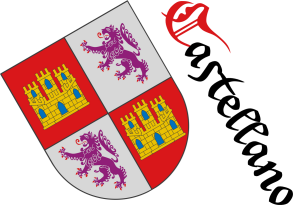
Quarterly: 1 and 4 Gules, a castle triple-towered Or, port and windows Azure, and masoned Sable; 2 and 3 Argent, a lion rampant Purpure, armed and langued Gules.
Coat of arms depicted by me, illuminated with lights and shadows, contoured in Sable, with an ogee external shape and with a freehand finishing.
Coat of arms of the King Alfonso X of Castile, 1221–1284, 1st son of the King Ferdinand III of Castile, 1199-1252, and the Queen Beatrice of Swabia, 1205–1235. The order of the quarters is first the castle of his grandmother, Queen Berenguela of Castile, and second the lion of his grandfather, King Alfonso IX of León; however, the other day I discovered that on the map by [Martineau du Plessis, D.; 1700; volume II, illustration 30, page 126], in the shield framed between parallels 37 and 36 and meridians 21 and 22, the lion occupies the 1st quarter and the castle the 2nd quarter; that is, their order appears reversed.
Blazon keywords: Gules, Or, Azure, Sable, Argent, Purpure, One, Quarterly, Castle, Triple-towered, Port and windows, Masoned, Lion, Rampant, Armed and Langued.
Style keywords: Outlined in sable, Illuminated, Ogee and Freehand.
Classification: Personal, Kingdom of Castile and Leon, Interpreted, Boa and Coat of arms.
Bearer: Alfonso X of Castile.

Badge Rui J. Vaz

Escutcheon quarterly: 1 Azure, a god Garuda sejant Argent; 2 Gules, a castle triple-towered Or, masoned Sable; 3 Argent, six pallets Gules; 4 Azure, five plates.
Heraldic device depicted by me, highlighted with lights and shadows, outlined in Sable, and with a leather finishing.
Heraldic badge of Rui J. Vaz's family, US, designed by him and emblazoned by me.
Blazon keywords: Azure, Gules, Argent, Or, One, Six, Five, Escutcheon, Quarterly, Garuda, Sejant, Castle, Triple-towered, Masoned, Pallet and Plate.
Style keywords: Outlined in sable, Illuminated and Leather.
Classification: Personal, Interpreted, Boa and Badge.
Bearer: Vaz, Rui J..
Castilian heraldry
Key Characteristics in Castilian Heraldry
Some of the main characteristics of the heraldry of Castile are:
- the rounded shapes, with a semicircle at the base,
- the importance of bordures,
- the inclusion of words and also letters in the coat of arms,
- the 2nd most common animal, after the lion, is the wolf [Valero de Bernabé, L.; 2010], and, of course,
- our castle triple-towered Or, port and windows Azure, masoned Sable [Valero de Bernabé, L.; 2009a].
The following image shows 4 examples of coats of arms, each of which has some of these characteristics, including one Castilian castle.

Comparing Castilian and English Heraldry
In the United Kingdom, there are several heraldic traditions, one of them being English heraldry.
In the Kingdom of Spain, there are several heraldic traditions, for example, the Castilian tradition.
In my humble opinion, we should compare at the same level, English heraldry with, for example, Castilian heraldry, but not with all Spanish heraldry. We shouldn't do it for the same reason we don't mix Scottish heraldic tradition with English, as they are so different.
In the case of Castilian heraldry, the 8 main differences with English heraldry are:
- The rounded shapes, with a semicircle at the base.
- The importance of bordures and the existence of the diminished bordure, called in Castilian «filiera».
- The inclusion of words and also letters in the coats of arms.
- The wolf is the 2nd most common animal, after the lion.
- The castle, triple-towered, which is different from the English and French types of castles.
- We can inherit arms from our mother and/or father; for example, the castle in the 1st quarter of the coat of arms of Castile and the coat of arms of Spain comes from a mother, Queen Berenguela of Castile, mother of King Fernando III, the Saint.
- There are 3 kinds of supporters with their owns heraldic names: «tenantes», human forms; «soportes», animals; and «sostenes», plants and things.
- Our quarterings do not necessarily mean that the arms are marshalled by inheritance. [Williams, N.; 2017; page 135, paragraph 26.02] describing the arms of Éamon de Valera, 1882-1975, President of Ireland, writes «Those arms are Spanish in appearance. The quartering without functions as a means of marshalling, is distinctively Iberian».
Categories: Criterion, Semi-circular, Bordure, Letter, Lion, Wolf, Castle, Triple-towered, Port and windows, Masoned, Or, Azure, Sable, Diminished bordure, Quarterly, Supporter (human form), Supporter, Supporter (animal) and Supporter (thing).
Crest, mantling and motto of Jose Manuel Gutiérrez Benítez

Azure, a chevron engrailed Or between three lozenges Argent, each charged with a fleur de lis Gules; a bordure compony of eight sections, four Vert each charged with a castle triple-towered Or, port and windows Azure, masoned Sable, and four Argent each charged with a bull's head caboshed Sable. Crest: Upon a helm lined Gules, with a wreath Or and Azure, five ostrich feathers, alternately three Azure and two Or. Mantling: Azure doubled Or. Motto: «Honor et Veritas Semper Prorsus» Sable, with initial letters Gules, over a scroll Argent.
Arms devised by me, illuminated with lights and shadows, outlined in Sable, with a semi-circular external shape and with a watercolor finishing.
Blazon keywords: Azure, Or, Argent, Gules, Vert, Sable, One, Two, Three, Four, Five, Eight, Chevron, Engrailed, Lozenge, Fleur de lis, Bordure, Compony, Castle, Triple-towered, Port and windows, Masoned, Bull, Head, Caboshed, Crest and mantling, Crest, Upon (wreath), Helm, Lined, Wreath, Ostrich feathers, Alternately, Mantling and Motto.
Style keywords: Outlined in sable, Illuminated, Semi-circular and Watercolor.
Classification: Personal, Created, Boa and Coat of arms.
Bearer: Gutiérrez Benítez, Jose Manuel.
Crown and motto of the city of Almeria

Argent, a cross Gules; a bordure compony of fifteen sections: 1, 6, and 11 Argent, a pomegranate seeded, slipped and leaved proper; 2, 7, and 12 Or, an eagle displayed Sable; 3, 8, and 13 Gules, a castle triple-towered Or, port and windows Gules, masoned Sable; 4, 9, and 14 Argent, a lion rampant Gules, crowned Or; 5, 10, and 15 Or, four pallets Gules. Crest: A closed royal crown. Motto: «Muy noble, muy leal y decidida por la libertad» Sable, with initial letters Gules, over a scroll Argent.
Coat of arms emblazoned by me, illuminated with lights and shadows, contoured in Sable, with a semi-circular outer contour and with a metal beaten finish.
Coat of arms of the city of Almeria, Andalusia, emblazoned by me. The motto of the official coat of arms includes the text «Ciudad de Almería», which I have chosen not to include in my rendition, as it is redundant given that the city is already represented by the coat of arms itself.
Blazon keywords: Argent, Gules, Or, Sable, Vert, One, Four, Fifteen, Cross, Bordure, Compony, Pomegranate, Slipped, Leaved, Proper, Eagle, Castle, Triple-towered, Port and windows, Masoned, Lion, Rampant, Crowned, Pallet, Closed royal crown, Crown, Motto and Scroll.
Style keywords: Outlined in sable, Illuminated, Semi-circular and Metal beaten.
Classification: Civic, Interpreted, Boa and Coat of arms.
Bearer: Almeria, city of.
Crown of Castilla-La Mancha

Party per pale: 1 Gules, a castle triple-towered Or, port and windows Azure, masoned Sable; 2 Argent. Crest: A closed royal crown Or.
Coat of arms emblazoned by me, highlighted with lights and shadows, contoured in Sable, with an ogee external shape and with a freehand finishing.
Design rationale
The coat of arms of Castilla-La Mancha was adopted in 1983, it is a recent design. This coat of arms is equal to the flag of Castilla-La Mancha officially approved in 1980 and designed by Ramón José Maldonado y Cocat. The 1st quarter represents Castilla and the 2nd quarter the great plane of La Mancha.
Blazon keywords: Gules, Argent, Or, Azure, Sable, One, Party per pale, Castle, Triple-towered, Port and windows, Masoned, Crest, Closed royal crown and Crown.
Style keywords: Outlined in sable, Illuminated, Ogee and Freehand.
Classification: Civic, Interpreted, Design rationale, Boa and Coat of arms.
Bearer: Castilla-La Mancha.
Crown of Crepsi

Party per pale: 1 Gules, in base a castle triple-towered Or, port and windows Azure, and masoned Sable; 2 Argent, in base a lion rampant Gules, crowned Or; overall a psi letter sable; a diminished bordure Or. Crest: A closed royal crown.
Coat of arms emblazoned by me, illuminated with lights and shadows, outlined in Sable, with a semi-circular external shape and with a texturized finishing.
Coat of arms of Crepsi, designed by my lieutenant colonel and friend Miguel Angel Nuñez Amador and emblazoned by me.
Blazon keywords: Gules, Argent, Or, Azure, Sable, Party per pale, In base, Castle, Triple-towered, Port and windows, Masoned, Lion, Rampant, Crowned, Overall, Letter, Diminished bordure, Closed royal crown and Crown.
Style keywords: Outlined in sable, Illuminated and Semi-circular.
Classification: Military, Interpreted, Boa and Coat of arms.
Bearer: Crepsi.
Crown of Her Royal Highness Doña Leonor Princess of Asturias
![Quarterly: 1 Gules, a castle triple-towered Or, port and windows Azure, masoned Sable [for Castile]; 2 Argent, a lion rampant Purpure, armed and langued Gules, crowned Or [for Leon]; 3 Or, four pallets Gules [for Aragon]; 4 Gules, a chain orlewise, crosswise, and saltirewise Or, charged in the fess point with an emerald Vert [for Navarre]; enté en point Argent, a pomegranate proper, seeded Gules, slipped and leaved Vert [for Granada]; an inescutcheon Azure, three fleurs de lis Or, 2 and 1, a bordure Gules [for Bourbon]; and the whole debruised by a label of three points Azure. Crest: A Crown of Prince. The shield is surrounded by the Golden Fleece.](../escudo_heraldico/_detalle.htm?img=LeonorPA.27.Corona.Preciosas.Toison.Irisado.jpg&cla=Siniestro "Crown of Her Royal Highness Doña Leonor Princess of Asturias")
Quarterly: 1 Gules, a castle triple-towered Or, port and windows Azure, masoned Sable [for Castile]; 2 Argent, a lion rampant Purpure, armed and langued Gules, crowned Or [for Leon]; 3 Or, four pallets Gules [for Aragon]; 4 Gules, a chain orlewise, crosswise, and saltirewise Or, charged in the fess point with an emerald Vert [for Navarre]; enté en point Argent, a pomegranate proper, seeded Gules, slipped and leaved Vert [for Granada]; an inescutcheon Azure, three fleurs de lis Or, 2 and 1, a bordure Gules [for Bourbon]; and the whole debruised by a label of three points Azure. Crest: A Crown of Prince. The shield is surrounded by the Golden Fleece.
Arms depicted by me, highlighted with lights and shadows, outlined in Sable, with a semi-circular external shape and with a iridescent finish.
This is my interpretation of the coat of arms of Her Royal Highness Doña Leonor Princess of Asturias (as heiress to the Crown of Castile), Princess of Girona (as heiress to the Crown of Aragon), and Princess of Viana (as heiress to the Kingdom of Navarre), with the Collar of the Distinguished Order of the Golden Fleece. Her coat of arms is that of her father, the King, charged with a label Azure and surmounted by the crown of a princess with four pearl diadems, three visible.
Blazon keywords: Gules, Azure, Purpure, Vert, Or, Argent, One, Three, Four, Quarterly, Castle, Triple-towered, Port and windows, Masoned, Lion, Rampant, Crowned, Pallet, Chain, Orlewise, Crosswise, Saltirewise, Charged, In the fess point, Emerald, Enté en point, Pomegranate, Proper, Slipped, Leaved, Inescutcheon, Fleur de lis, Ordered, Bordure, Cadency, Label of three points, Crown of Prince, Crown, Surrounded and Collar.
Style keywords: Outlined in sable, Illuminated, Semi-circular and Iridescent.
Classification: Personal, Kingdom of Spain, Interpreted, Boa and Coat of arms.
Bearer: Leonor Princess of Asturias.
Crown of the Infanta Berenguela of Castile

Quarterly: 1 and 4 Gules, a castle triple-towered Or, port and windows Azure, and masoned Sable; 2 and 3 Argent, a lion rampant Purpure, armed and langued Gules; a bordure compony of sixteen sections: eight Gules, a castle triple-towered Or, port and windows Azure, and masoned Sable, eight Or, an eagle displayed Sable. Crest: An open royal crown.
Arms emblazoned by me, illuminated with lights and shadows, contoured in Sable, with an ogee external shape and with a metal beaten finish.
Coat of arms of the Infanta Berenguela of Castile, 1228–1279, 5th daughter of the King Ferdinand III of Castile, 1199-1252, and the Queen Beatrice of Swabia, 1205–1235. The coat of arms of Infanta Berenguela of Castile, besides being beautiful, has always seemed to me the epitome of the Castilian arms: quartered, bearing Leon and Castile, and surrounded by a bordure compony with castles. This coat of arms has been emblazoned by me.
Blazon keywords: Gules, Or, Azure, Sable, Argent, Purpure, One, Sixteen, Eight, Quarterly, Castle, Triple-towered, Port and windows, Masoned, Lion, Rampant, Armed, Langued, Bordure, Compony, Eagle, Crest, Open royal crown and Crown.
Style keywords: Outlined in sable, Illuminated, Ogee and Metal beaten.
Classification: Personal, Kingdom of Castile and Leon, Interpreted, Boa and Coat of arms.
Bearer: Berenguela of Castile, Infanta.
Fernando Durán Cabral de Melo e Alpoim, St. Michael of the Wing and Maestranza of Castile
![Quarterly: 1 Gules, a pale Or upon six waves Azure and Argent, a bordure Or charged with eight lions' heads erased Gules [for Durán]; 2 Azure, a crescent reversed Argent, in dexter chief a fleur de lis Or, a bordure Gules [for Alpoim]; 3 Argent, two goats in pale Purpure, horned Sable [for Cabral]; 4 Gules, a double cross throughout Or cantoned by six plates, a bordure Or [for Melo]; an inescutcheon quarterly: 1 and 4 Argent, five escutcheons in cross Azure, each charged with five plates in saltire; a bordure Gules, charged with seven castles triple-towered Or, 3, 2, and 2 [for Portugal]; the whole debruised by a baston Sable; 2 and 3 party per chevron Argent and Gules, in chief two lions combatant Purpure, armed and langued Gules [for Leon], in base a castle triple-towered Or, port and windows Azure, masoned Sable [for Castile]; a bordure compony of eighteen sections Or and vair [for Álvarez de las Asturias]. Crest: Upon a helm in profile Argent, with visor bars Or, and a wreath Or and Azure, an arm proper, vested Azure, lined Or, supporting a scroll Azure doubled Or, inscribed with the cry «Notre Dame du Puy» Or. Mantling: Azure doubled Or. Suspended from the shield, the cross of the Royal Equestrian and Military Order of Saint Michael of the Wing and the insignia of the Equestrian Order of the Maestranza of Castile.](../escudo_heraldico/_detalle.htm?img=DuranCabralMeloAlpoimNoronhaF.26.SMiguelAla.MCastilla.TrazoAlzado.jpg&cla=Siniestro "Fernando Durán Cabral de Melo e Alpoim, St. Michael of the Wing and Maestranza of Castile")
Quarterly: 1 Gules, a pale Or upon six waves Azure and Argent, a bordure Or charged with eight lions' heads erased Gules [for Durán]; 2 Azure, a crescent reversed Argent, in dexter chief a fleur de lis Or, a bordure Gules [for Alpoim]; 3 Argent, two goats in pale Purpure, horned Sable [for Cabral]; 4 Gules, a double cross throughout Or cantoned by six plates, a bordure Or [for Melo]; an inescutcheon quarterly: 1 and 4 Argent, five escutcheons in cross Azure, each charged with five plates in saltire; a bordure Gules, charged with seven castles triple-towered Or, 3, 2, and 2 [for Portugal]; the whole debruised by a baston Sable; 2 and 3 party per chevron Argent and Gules, in chief two lions combatant Purpure, armed and langued Gules [for Leon], in base a castle triple-towered Or, port and windows Azure, masoned Sable [for Castile]; a bordure compony of eighteen sections Or and vair [for Álvarez de las Asturias]. Crest: Upon a helm in profile Argent, with visor bars Or, and a wreath Or and Azure, an arm proper, vested Azure, lined Or, supporting a scroll Azure doubled Or, inscribed with the cry «Notre Dame du Puy» Or. Mantling: Azure doubled Or. Suspended from the shield, the cross of the Royal Equestrian and Military Order of Saint Michael of the Wing and the insignia of the Equestrian Order of the Maestranza of Castile.
Arms emblazoned by me, highlighted with lights and shadows, contoured in Sable, with an ogee external shape and with a freehand finishing.
Blazon keywords: Gules, Or, Azure, Argent, One, Two, Five, Six, Seven, Eight, Eighteen, Quarterly, Pale, Upon, Wave, Bordure, Charged, Lion, Head, Erased, Crescent, Reversed, In the dexter chief, Fleur de lis, Goat, In pale, Horned, Double cross throughout, Cantoned, Plate, Inescutcheon, Escutcheon, In cross, In saltire, Castle, Triple-towered, Cadency, Baston, Party per chevron, In chief, Combatant, Armed, Langued, In base, Port and windows, Masoned, Compony, Vair, Upon (wreath), Helm, Facing dexter, Barred, Wreath, Arm, Proper, Vested, Lined, Grasping, Scroll, Doubled, Inscribed, War cry, Mantling, Suspended from the shield and Decoration.
Style keywords: Outlined in sable, Illuminated, Ogee and Freehand.
Classification: Personal, Lineage, Interpreted, Boa and Coat of arms.
Bearer: Durán Cabral de Melo e Alpoim, Fernando.
Henry of Castile, Infante

Quarterly: 1 and 4 Gules, a castle triple-towered Or, port and windows Azure, and masoned Sable; 2 and 3 Argent, a cross flory Purpure.
Escudo cuartelado: 1o y 4o de gules, un castillo de oro, aclarado de azur, mazonado de sable; 2o y 3o de plata, una cruz flordelisada de púrpura.
Coat of arms emblazoned by me, illuminated with lights and shadows, contoured in Sable, with an ogee external shape and with a freehand finish.
Coat of arms of the Infante Henry of Castile, 1230–1303, 6th offspring of the King Ferdinand III of Castile, 1199-1252, and the Queen Beatrice of Swabia, 1205–1235. He bore his father's arms, replacing the lion Purpure of the Kingdom of León with a cross flory Purpure, likely due to his close association with the Order of Calatrava, whose emblem is a cross flory Gules. However, he retained the metal Argent field in the 2nd and 3rd quarters and the lion's purpure color, suggesting this was more of a conceptual change than a quartering by alliance with the Order of Calatrava.
Blazon keywords: Gules, Or, Azure, Sable, Argent, Purpure, One, Quarterly, Castle, Triple-towered, Port and windows, Masoned, Cross flory and Cross couped.
Style keywords: Outlined in sable, Illuminated, Ogee and Freehand.
Classification: Personal, Kingdom of Castile and Leon, Interpreted, Boa and Coat of arms.
Bearer: Henry of Castile, Infante.

Infante Manuel of Castile, schema 3x4

In Castile, a coat of arms quarterly does not necessarily signify inheritance. This schema illustrates two practices: a) Quarterings can represent the mother in the 1st and 4th quarters and the father in the 2nd and 3rd, highlighting the prominence given to the maternal line by placing it in the most visible quarters. b) Quarterings can also include personal symbols and concepts, like canting arms, for example, «Manuel» =«mano» + «ala» = «hand» + «wing», combined with ancestral arms. This flexibility reflects Castilian heraldic traditions, where arms are not strictly marshalled by inheritance. The inclusion of maternal arms in the 1st and 4th quarters highlights how Castilian heraldry often elevates maternal heritage, differing from some other heraldic traditions. The previous commentary emphasizes the creative freedom in Castile, where quartering could incorporate personal symbols or canting arms without the constraints of inheritance or dominium. This flexibility aligns with Castilian culture, allowing heraldry to reflect personal identity, not just dynastic ties. Notably, the arms of Infante Enrique's use of a cross flory demonstrates this creative freedom, showcasing the ability to innovate within heraldry even in royal contexts. While this might seem unconventional compared to other heraldic systems, it is deeply rooted in Castilian tradition. All coats of arms in this schema have been emblazoned by me.
Blazon keywords: Argent, Purpure, Gules, Or, Azure, Sable, One, Quarterly, Lion, Rampant, Armed, Langued, Castle, Triple-towered, Port and windows, Masoned, Bordure, Compony, Eagle, Cross flory, Cross couped, Party per pale, Hand, Arm, Vambraced, Embowed, Winged, Sword, Point upwards and Hilted.
Style keywords: Outlined in sable, Illuminated and Ogee.
Classification: Personal, Kingdom of Castile and Leon, Interpreted, Design rationale, Schema, Boa and Coat of arms.
Bearer: Manuel of Castile, Infante.
Larkin, Kevin

Azure, a castle triple-towered per pale Argent and Or, masoned Sable, port and windows Azure, between in chief two bars wavy Argent, in base two bars wavy Argent.
Escudo de azur, un castillo partido de plata y oro, mazonado de sable, aclarado de azur, acompañado en jefe de dos fajas ondadas de plata, y en en punta de dos fajas ondadas de plata.
Coat of arms devised by me, highlighted with lights and shadows, outlined in Sable, with a semi-circular outer contour and with a watercolor finishing.
The arms of Kevin Larkin from Ireland and Spain, designed and emblazoned by me. Blazon in French: «D'azur à la tour partie d'argent et d'or, donjonnée de trois tourelles, maçonnée de sable, ouverte et ajourée du champ, accompagnée en chef et en pointe de deux jumelles ondées d'argent».
Blazon keywords: Azure, Argent, Or, One, Two, Castle, Triple-towered, Party per pale, Masoned, Port and windows, Between, In chief, Bar, Wavy and In base.
Style keywords: Outlined in sable, Illuminated, Semi-circular and Watercolor.
Classification: Personal, Created, Boa and Coat of arms.
Bearer: Larkin, Kevin.
Lazaro of Aragon, lineage

Gules, a castle triple-towered Or, masoned Sable, issuant from its port a dragon passant Vert, in chief a pelican in her piety Argent, vulned Gules.
Escudo de gules, un castillo de oro, mazonado de sable y saliendo por su puerta un dragón pasante de sinople, en jefe un pelícano desplegado de plata, la piedad de gules.
Coat of arms interpreted by me, highlighted with lights and shadows, outlined in Sable, with a semi-circular outer contour and with a freehand finishing.
Ancient arms of the lineage Lazaro of Aragon emblazoned by me.
Blazon keywords: Gules, Or, Vert, Argent, One, Castle, Triple-towered, Masoned, Issuant (port), Dragon, Passant, In chief, Pelican in her piety and Pelican.
Style keywords: Outlined in sable, Illuminated, Semi-circular and Freehand.
Classification: Personal, Lineage, Interpreted, Boa and Coat of arms.
Bearer: Lazaro of Aragon, lineage.
Madrid, Comunidad de

Gules, two castles triple-towered Or, port and windows Azure, masoned Sable, in chief, seven mullets Argent, 4 and 3.
Escudo de gules, dos castillos de oro, aclarados de azur, mazonados de sable surmontados de siete estrellas de plata, 4 y 3.
Coat of arms depicted by me, illuminated with lights and shadows, outlined in Sable, with a semi-circular outer contour and with a freehand finishing.
Coat of arms of the Comunidad de Madrid emblazoned by me. In English blazonry, the arrangement of multiple charges is usually described by rows, whereas in Castilian blazonry it is more commonly expressed by columns. However, in this case, as the 7 mullets are placed in chief, it is understood that a horizontal arrangement in 2 rows is the most reasonable solution. For this reason, in both English and Castilian I blazoned the mullets as 4 and 3, that is, 7 mullets arranged in 2 rows, the upper row of 4 mullets and the lower row of 3. It is then the artistic judgement of the heraldic artist to place each of the 3 mullets of the lower row beneath the space between 2 mullets of the upper row, resulting in an overall quincunx arrangement.
Design rationale
The castles came from Castile and the 7 mullet from the bordure of the city of Madrid, they are the stars of the Plough, the 7 brightest stars of the Ursa Major. This coat of arms was adopted by the Comunidad de Madrid the 23th of December 23 of 1983.
Blazon keywords: Gules, Or, Azure, Argent, Two, Seven, Castle, Triple-towered, Port and windows, Masoned, In chief and Mullet.
Style keywords: Outlined in sable, Illuminated, Semi-circular and Freehand.
Classification: Civic, Interpreted, Boa and Coat of arms.
Bearer: Madrid, Comunidad de.
Manuel Ladrón de Guevara e Isasa, a cross behind the shield

Party per pale: 1 quarterly: 1 and 4 Or, three bendlets Argent, fimbriated Gules, each charged with ermine spots; 2 and 3 Gules, five poplar leaves in saltire Argent; overall an inescutcheon Gules charged with a grenade Or; 2 Or, issuant from a sea wavy Argent and Azure, a castle triple-towered Sable; a bordure Gules charged with eight saltires couped Or. Behind the shield the cross of the Real Cuerpo de la Nobleza of Madrid.
Arms painted by me, highlighted with lights and shadows, contoured in Sable, with a semi-circular outer contour and with a rough finishing.
R0037, Chief Herald of Arms of Malta's register of the coat of arms of Manuel Ladrón de Guevara e Isasa. This coat of arms has been emblazoned by me.
Blazon keywords: Gules, Or, Argent, Azure, Three, Five, One, Eight, Party per pale, Quarterly, Bendlet, Fimbriated, Charged, Ermine spot, Poplar leaf, In saltire, Overall, Inescutcheon, Grenade, Issuant, Sea, Wavy, Castle, Triple-towered, Bordure, Saltire, Couped, Behind the shield and Cross.
Style keywords: Outlined in sable, Illuminated, Semi-circular and Rough.
Classification: Personal, Interpreted, Boa and Coat of arms.
Bearer: Ladrón de Guevara e Isasa, Manuel.
Moguer, municipality of

Chequey of fifteen Or and Azure; a bordure compony of sixteen sections, eight gules, a castle triple-towered Or, port and windows Azure, masoned Sable, eight Argent, a lion rampant Purpure, crowned Or, armed and langued Gules.
Escudo ajedrezado de quince piezas de oro y azur; una bordura componada de dieciséis compones, ocho de gules, un castillo de oro, aclarado de azur, mazonado de sable, ocho de plata, un león rampante de púrpura, coronado de oro, armado y lampasado de gules.
Coat of arms emblazoned by me, highlighted with lights and shadows, outlined in Sable, with a semi-circular outer contour and with a watercolor finish.
Coat of arm of the municipality of Moguer, Andalusia, emblazoned by me.
Blazon keywords: Or, Azure, Gules, Argent, One, Fifteen, Sixteen, Eight, Chequey, Bordure, Compony, Section, Charged, Castle, Triple-towered, Port and windows, Masoned, Lion, Rampant, Crowned, Armed and Langued.
Style keywords: Outlined in sable, Illuminated, Semi-circular and Watercolor.
Classification: Civic, Interpreted, Boa and Coat of arms.
Bearer: Moguer, municipality of.
Monroy, municipality of

Quarterly: 1 and 4 Gules, a castle triple-towered Or, port and windows Azure, and masoned Sable; 2 and 3 vair ancient.
Escudo cuartelado: 1o y 4o de gules, un castillo de oro, aclarado de azur, mazonado de sable; 2o y 3o de veros antiguos.
Arms depicted by me, illuminated with lights and shadows, contoured in Sable, with an ogee outer contour and with a freehand finish.
Coat of arms of the municipality of Monroy, Caceres, emblazoned by me with vair ancient. I have painted it using vair ancient, as I wish to illustrate with this coat of arms a reflection on the Virgin of the Sagrario of Plasencia, Caceres, dating from the mid-13th century, and on the forty-four coats of arms made of gilded silver sheet that adorn it, featuring lions, castles, and rounded vair ~ vair ancient, these may be associated with the lords of Monroy, a lineage of considerable importance in the town of Plasencia during the Late Middle Ages, can be seen in The Virgin of the Sagrario of Plasencia and the Monroy vair.
Blazon keywords: Gules, Or, Azure, Sable, One, Quarterly, Castle, Triple-towered, Port and windows, Masoned and Vair ancient.
Style keywords: Outlined in sable, Illuminated, Ogee and Freehand.
Classification: Civic, Interpreted, Boa and Coat of arms.
Bearer: Monroy, municipality of.
Noronha, House of
![Quarterly: 1 and 4 Argent, five escutcheons in cross Azure, each charged with five plates in saltire; a bordure Gules, charged with seven castles triple-towered Or, 3, 2, and 2 [for Portugal]; the whole debruised by a baston Sable; 2 and 3 party per chevron Argent and Gules, in chief two lions combatant Purpure, armed and langued Gules [for Leon], in base a castle triple-towered Or, port and windows Azure, masoned Sable [for Castile]; a bordure compony of eighteen sections Or and vair [for Álvarez de las Asturias].](../escudo_heraldico/_detalle.htm?img=NoronhaC.22.Escudo.Metal.Avr20.jpg&cla=Diestro "Noronha, House of")
Quarterly: 1 and 4 Argent, five escutcheons in cross Azure, each charged with five plates in saltire; a bordure Gules, charged with seven castles triple-towered Or, 3, 2, and 2 [for Portugal]; the whole debruised by a baston Sable; 2 and 3 party per chevron Argent and Gules, in chief two lions combatant Purpure, armed and langued Gules [for Leon], in base a castle triple-towered Or, port and windows Azure, masoned Sable [for Castile]; a bordure compony of eighteen sections Or and vair [for Álvarez de las Asturias].
Escudo cuartelado: 1o y 4o de plata, cinco escudetes en cruz de azur, cada uno cargado de cinco bezantes en sotuer de plata; una bordura de gules, cargada de siete castillos de oro, 3, 1 y 3; [de Portugal] brisado de un bastón de sable; 2o y 3o de plata, mantelado en punta de gules, en jefe, dos leones afrontados de púrpura, armados y lampasados de gules [de León], en punta un castillo de oro, aclarado de azur, mazonado de sable [de Castilla]; una bordura componada de dieciocho compones de oro y veros [de Álvarez de las Asturias].
Arms depicted by me, illuminated with lights and shadows, outlined in Sable, with an ogee external shape and with a metal beaten finish.
Coat of arms of the House of Noronha in Portugal, a lineage of dual royal origin. The House of Noronha originated with Alfonso Enríquez of Castile, Count of Noreña and Gijón, the natural son of King Henry II of Castile, founder of the Trastámara dynasty, and of Elvira Íñiguez. The lineage became linked to the Portuguese Royal House through the marriage of Alfonso Enríquez to Isabel of Portugal, the natural daughter of King Ferdinand I of Portugal, an alliance arranged in the context of the Treaty of Santarém of 1373, which brought an end to the Fernandine Wars, during which Ferdinand I of Portugal confronted the kings of the House of Trastámara over the throne of Castile following the murder of Peter I at the hands of his half-brother Henry. The House of Noronha became established in Portugal, and its arms quarter those of the Kingdom of Portugal, differenced by a brisure consisting of a baston Sable, and those of the House of Trastámara. This coat of arms has been emblazoned for Fernando Durán Cabral de Mello d’Alpoim by me as a preparatory work for his armorial bearings, his coat of arms has a inescutcheon with the arms of the House of Noronha.
Blazon keywords: Argent, Azure, Gules, Or, Sable, Purpure, One, Two, Five, Seven, Eighteen, Quarterly, Escutcheon, In cross, Charged, Plate, In saltire, Bordure, Castle, Triple-towered, Cadency, Baston, Party per chevron, In chief, Lion, Combatant, Armed, Langued, In base, Port and windows, Masoned, Compony and Vair.
Style keywords: Outlined in sable, Illuminated, Ogee and Metal beaten.
Classification: Civic, Interpreted, Boa and Coat of arms.
Bearer: Noronha, House of.
Philip of Castile, Infante

Quarterly: 1 and 4 Gules, a castle triple-towered Or, port and windows Azure, and masoned Sable; 2 and 3 Or, an eagle displayed Sable.
Escudo cuartelado: 1o y 4o de gules, un castillo de oro, aclarado de azur, mazonado de sable; 2o y 3o de oro, un águila de sable.
Arms painted by me, illuminated with lights and shadows, outlined in Sable, with an ogee external shape and with a freehand finish.
Coat of arms of the Infante Philip of Castile, 1231–1274, 7th offspring of the King Ferdinand III of Castile, 1199-1252, and the Queen Beatrice of Swabia, 1205–1235. This coat of arms has been emblazoned by me and can be consulted in [Messía de la Cerda y Pita, L.; 1990; page 146] with the field Or in the 2nd and 3rd quarters. He bears a quarterly shield combining the first quarter of his father’s arms, Castile, with his mother’s arms. Among all his siblings, he is the one who most closely combines the arms of both parents.
Blazon keywords: Gules, Or, Azure, Sable, One, Quarterly, Castle, Triple-towered, Port and windows, Masoned and Eagle.
Style keywords: Outlined in sable, Illuminated, Ogee and Freehand.
Classification: Personal, Kingdom of Castile and Leon, Interpreted, Boa and Coat of arms.
Bearer: Philip of Castile, Infante.
Portugal, 14 castles and 9 plates from 1248 to 1385

Argent, five escutcheons in cross Azure, each charged with ten plates, 3, 3, 3 and 1; a bordure Gules, charged with fourteen castles triple-towered Or, 5, 2, 2, 2, 2 and 1.
Arms depicted by me, illuminated with lights and shadows, outlined in Sable, and with a freehand finishing.
Coat of arms of the Kingdom of Portugal with 14 castles on the bordure and 10 plates in each escutcheon from 1248 to 1385. This coat of arms has been emblazoned by me. From 3 elements onwards, in English, I usually specify the distribution by rows. In this way I write 5, 2, 2, 2, 2 and 1, which together make a total of 14 castles. The same can be observed in the specification of the 10 plates: by rows in English, 3, 3, 3 and 1, and by columns in Castilian, 3, 4 and 3. In Portuguese these escutcheons are known as «quinas».
Blazon keywords: Argent, Azure, Gules, Or, Ten, Fourteen, Escutcheon, In cross, Charged, Plate, In saltire, Bordure, Castle and Triple-towered.
Style keywords: Outlined in sable, Illuminated and Freehand.
Classification: Civic, Interpreted, Boa and Coat of arms.
Bearer: Portugal.
Roberto Luchoro and Darryn Carlo, plain tincture

Vert, on a fess Argent, between in chief a castle triple-towered Or, port and windows Gules, masoned Sable, between four mullets Argent, 2 and 2, and in base a Merino ram's head caboshed Or, between three mullets Argent, 2 and 1, two wolves passant Sable.
Arms devised by me, in plain tinctures, contoured in Sable, with a semi-circular outer contour and with a texturized finish.
These are the matrimonial and family arms of Darryn Carlo and Roberto Luchoro emblazoned by me.
Blazon keywords: Vert, Argent, Or, Gules, Sable, One, Two, Seven, Fess, Between, In chief, Castle, Triple-towered, Port and windows, Masoned, Mullet, In base, Merino ram, Head, Caboshed, Wolf and Passant.
Style keywords: Outlined in sable, Plain tincture and Semi-circular.
Classification: Personal, Created, Boa and Coat of arms.
Bearer: Luchoro and Darryn Carlo, Roberto.
Sancho of Castile, Infante

Party per pale: 1 Gules, a castle triple-towered Or, port and windows Azure, and masoned Sable; 2 Argent, a lion rampant Purpure, armed and langued Gules.
Escudo partido: 1o de gules, un castillo de oro, aclarado de azur, mazonado de sable; 2o de plata, un león rampante de púrpura, armado y lampasado de gules.
Arms emblazoned by me, highlighted with lights and shadows, contoured in Sable, with an ogee outer contour and with a freehand finish.
Coat of arms of the Infante Sancho of Castile, 1233–1261, 8th offspring of the King Ferdinand III of Castile, 1199-1252, and the Queen Beatrice of Swabia, 1205–1235. Unlike his siblings, he does not use a quarterly shield but rather impaled arms of Castile and Leon.
Blazon keywords: Gules, Or, Azure, Sable, Argent, Purpure, One, Party per pale, Castle, Triple-towered, Port and windows, Masoned, Lion, Rampant, Armed and Langued.
Style keywords: Outlined in sable, Illuminated, Ogee and Freehand.
Classification: Personal, Kingdom of Castile and Leon, Interpreted, Boa and Coat of arms.
Bearer: Sancho of Castile, Infante.
Spain, Kingdom of
![Quarterly: 1 Gules, a castle triple-towered Or, port and windows Azure, masoned Sable [for Castile]; 2 Argent, a lion rampant Purpure, armed and langued Gules, crowned Or [for Leon]; 3 Or, four pallets Gules [for Aragon]; 4 Gules, a chain orlewise, crosswise, and saltirewise Or, charged in the fess point with an emerald Vert [for Navarre]; enté en point Argent, a pomegranate proper, seeded Gules, slipped and leaved Vert [for Granada]; an inescutcheon Azure, three fleurs de lis Or, 2 and 1, a bordure Gules [for Bourbon].](../escudo_heraldico/_detalle.htm?img=EspanaR.21.Escudo.TrazoAlzado.jpg&cla=Diestro "Spain, Kingdom of")
Quarterly: 1 Gules, a castle triple-towered Or, port and windows Azure, masoned Sable [for Castile]; 2 Argent, a lion rampant Purpure, armed and langued Gules, crowned Or [for Leon]; 3 Or, four pallets Gules [for Aragon]; 4 Gules, a chain orlewise, crosswise, and saltirewise Or, charged in the fess point with an emerald Vert [for Navarre]; enté en point Argent, a pomegranate proper, seeded Gules, slipped and leaved Vert [for Granada]; an inescutcheon Azure, three fleurs de lis Or, 2 and 1, a bordure Gules [for Bourbon].
Escudo cuartelado: 1o de gules, un castillo de oro, aclarado de azur, mazonado de sable [de Castilla]; 2o de plata, un león rampante de púrpura, lampasado y armado de gules, coronado de oro [de León]; 3o de oro, con cuatro palos de gules [de Aragón]; 4o de gules, una cadena puesta en orla, en cruz y en sotuer de oro, cargada en el centro de una esmeralda de sinople [de Navarra]; entado en punta de plata, una granada al natural, tajada de gules, tallada y hojada de sinople [de Granada]; un escusón de azur, tres flores de lis de oro, 2 y 1, una bordura de gules [de Borbón].
Arms depicted by me, illuminated with lights and shadows, contoured in Sable, with a semi-circular outer contour and with a freehand finishing.
Arms of the Kingdom of Spain emblazoned by me. Although in the official blazon text it is blazoned as a point vert, and as a point what is painted in a way that it is not known whether it is a large point or an uncutt circular emerald, in the blazon I have described it as an emerald both in Spanish and in English, since the point does not have a clear heraldic existence in Spanish and even less so in English.
Blazon keywords: Gules, Azure, Purpure, Vert, Or, Argent, One, Three, Four, Quarterly, Castle, Triple-towered, Port and windows, Masoned, Lion, Rampant, Crowned, Pallet, Chain, Orlewise, Crosswise, Saltirewise, Charged, In the fess point, Emerald, Enté en point, Pomegranate, Proper, Slipped, Leaved, Inescutcheon, Fleur de lis, Ordered and Bordure.
Style keywords: Outlined in sable, Illuminated, Semi-circular and Freehand.
Classification: Civic, Kingdom of Spain, Interpreted, Boa and Coat of arms.
Bearer: Spain, Kingdom of.
The Golden Fleece and Charles V, Holy Roman Emperor
![Party per fess: 1 party per pale: 1 quarterly: 1 and 4 Gules, a castle triple-towered Or, port and windows Azure, masoned Sable [for Castile]; 2 and 3 Argent, a lion rampant Purpure, armed and langued Gules, crowned Or [for Leon]. 2 quarterly: 1 Or, four pallets Gules [for Aragon]; 2 quarterly per saltire: 1 and 4 Or, four pallets Gules; 2 and 3 Argent, an eagle displayed Sable [for Aragon-Sicily]. 3 Argent, a cross potent cantoned of four crosslets Or [for Jerusalem]. 4 Gules, a chain orlewise, crosswise, and saltirewise Or, charged in the fess point with an emerald Vert [for Navarre]. Enté en point Argent, a pomegranate proper, seeded Gules, slipped and leaved Vert [for Granada]. 2 quarterly: 1 Gules, a fess Argent [for Austria]; 2 Azure semé of fleurs de lis Or within a bordure compony Argent and Gules [for Burgundy modern]; 3 bendy Or and Azure within a bordure Gules [for Burgundy ancient]; 4 Sable, a lion rampant Or, armed and langued Gules [for Brabant]; overall an inescutcheon party per pale: 1 Or, a lion rampant Sable, armed and langued Gules [for Flanders]; 2 Argent, an eagle displayed Gules, crowned, armed, beaked, langued and membered Or, charged on the wings with two trefoiled stems Or [for Tyrol]. Crest: An imperial crown with two fanons Argent, fringed Or. Behind the shield a double-headed eagle displayed Sable, nimbed, beaked and armed Or, langued and membered Gules, enfiled by an open royal crown above the shield. Supporters: two columns Argent between in base waves Azure, in chief an imperial crown the dexter and a closed royal crown the sinister. Moto environing the columns: «Plus Ultra» Or over a scroll Gules. The shield is surrounded by the Golden Fleece.](../escudo_heraldico/_detalle.htm?img=CarlosV.26.TosionDeOro.TrazoAlzado.jpg&cla=Centro "The Golden Fleece and Charles V, Holy Roman Emperor")
Party per fess: 1 party per pale: 1 quarterly: 1 and 4 Gules, a castle triple-towered Or, port and windows Azure, masoned Sable [for Castile]; 2 and 3 Argent, a lion rampant Purpure, armed and langued Gules, crowned Or [for Leon]. 2 quarterly: 1 Or, four pallets Gules [for Aragon]; 2 quarterly per saltire: 1 and 4 Or, four pallets Gules; 2 and 3 Argent, an eagle displayed Sable [for Aragon-Sicily]. 3 Argent, a cross potent cantoned of four crosslets Or [for Jerusalem]. 4 Gules, a chain orlewise, crosswise, and saltirewise Or, charged in the fess point with an emerald Vert [for Navarre]. Enté en point Argent, a pomegranate proper, seeded Gules, slipped and leaved Vert [for Granada]. 2 quarterly: 1 Gules, a fess Argent [for Austria]; 2 Azure semé of fleurs de lis Or within a bordure compony Argent and Gules [for Burgundy modern]; 3 bendy Or and Azure within a bordure Gules [for Burgundy ancient]; 4 Sable, a lion rampant Or, armed and langued Gules [for Brabant]; overall an inescutcheon party per pale: 1 Or, a lion rampant Sable, armed and langued Gules [for Flanders]; 2 Argent, an eagle displayed Gules, crowned, armed, beaked, langued and membered Or, charged on the wings with two trefoiled stems Or [for Tyrol]. Crest: An imperial crown with two fanons Argent, fringed Or. Behind the shield a double-headed eagle displayed Sable, nimbed, beaked and armed Or, langued and membered Gules, enfiled by an open royal crown above the shield. Supporters: two columns Argent between in base waves Azure, in chief an imperial crown the dexter and a closed royal crown the sinister. Moto environing the columns: «Plus Ultra» Or over a scroll Gules. The shield is surrounded by the Golden Fleece.
Arms depicted by me, illuminated with lights and shadows, outlined in Sable, with a semi-circular external shape and with a freehand finishing.
Arms of Charles, Holy Roman Emperor, emblazoned by me.
Blazon keywords: Gules, Azure, Sable, Argent, Purpure, Or, Vert, One, Two, Four, Party per fess, Party per pale, Quarterly, Castle, Triple-towered, Port and windows, Masoned, Lion, Rampant, Armed, Langued, Crowned, Pale, Quarterly per saltire, Eagle, Displayed, Cross potent, Cross couped, Cantoned, Crosslet, Chain, Orlewise, Crosswise, Saltirewise, Charged, In the fess point, Emerald, Enté en point, Pomegranate, Proper, Seeded, Slipped, Leaved, Fess, Semé, Fleur de lis, Bordure, Compony, Bendy, Overall, Inescutcheon, Beaked, Membered, Wing, Trefoiled, Stem, Crest, Imperial crown, Crown, Fanon, Fringed, Behind the shield, Double-headed, Nimbed, Enfiled, Open royal crown, Above the shield, Supporter (thing), Supporter, Column, Shafted, Between, In base, Wave, In chief, Dexter, Closed royal crown, Sinister, Motto, Environed, Scroll, Surrounded and Collar.
Style keywords: Outlined in sable, Illuminated, Semi-circular and Freehand.
Classification: Civic, Interpreted, Boa and Coat of arms.
Bearer: Charles V, Holy Roman Emperor.
Toison and crown of Felipe VI of Spain, plain tinctures
![Quarterly: 1 Gules, a castle triple-towered Or, port and windows Azure, masoned Sable [for Castile]; 2 Argent, a lion rampant Purpure, armed and langued Gules, crowned Or [for Leon]; 3 Or, four pallets Gules [for Aragon]; 4 Gules, a chain orlewise, crosswise, and saltirewise Or, charged in the fess point with an emerald Vert [for Navarre]; enté en point Argent, a pomegranate proper, seeded Gules, slipped and leaved Vert [for Granada]; an inescutcheon Azure, three fleurs de lis Or, 2 and 1, a bordure Gules [for Bourbon]. Crest: A closed royal crown. The shield is surrounded by the Golden Fleece.](../escudo_heraldico/_detalle.htm?img=FelipeVI.18.Corona.Toison.TintaPlana.jpg&cla=Diestro "Toison and crown of Felipe VI of Spain, plain tinctures")
Quarterly: 1 Gules, a castle triple-towered Or, port and windows Azure, masoned Sable [for Castile]; 2 Argent, a lion rampant Purpure, armed and langued Gules, crowned Or [for Leon]; 3 Or, four pallets Gules [for Aragon]; 4 Gules, a chain orlewise, crosswise, and saltirewise Or, charged in the fess point with an emerald Vert [for Navarre]; enté en point Argent, a pomegranate proper, seeded Gules, slipped and leaved Vert [for Granada]; an inescutcheon Azure, three fleurs de lis Or, 2 and 1, a bordure Gules [for Bourbon]. Crest: A closed royal crown. The shield is surrounded by the Golden Fleece.
Coat of arms emblazoned by me, in plain tinctures, outlined in Sable, with a semi-circular outer contour and with a texturized finishing.
This is my interpretation of the coat of arms of His Majesty King Felipe VI of Spain, bearing the Collar of the Distinguished Order of the Golden Fleece.
Blazon keywords: Gules, Azure, Purpure, Vert, Or, Argent, One, Three, Four, Quarterly, Castle, Triple-towered, Port and windows, Masoned, Lion, Rampant, Crowned, Pallet, Chain, Orlewise, Crosswise, Saltirewise, Charged, In the fess point, Emerald, Enté en point, Pomegranate, Proper, Slipped, Leaved, Inescutcheon, Fleur de lis, Ordered, Bordure, Closed royal crown, Crown, Surrounded and Collar.
Style keywords: Outlined in sable, Plain tincture and Semi-circular.
Classification: Personal, Kingdom of Spain, Interpreted, Boa and Coat of arms.
Bearer: Felipe VI of Spain.
Trastámara, House of
![Party per chevron Argent and Gules, in chief two lions combatant Purpure, armed and langued Gules [for Leon], in base a castle triple-towered Or, port and windows Azure, masoned Sable [for Castile]; a bordure compony of eighteen sections Or and vair [for Álvarez de las Asturias].](../escudo_heraldico/_detalle.htm?img=TrastamaraC.22.Conopial.Metal.Avr20.jpg&cla=Diestro "Trastámara, House of")
Party per chevron Argent and Gules, in chief two lions combatant Purpure, armed and langued Gules [for Leon], in base a castle triple-towered Or, port and windows Azure, masoned Sable [for Castile]; a bordure compony of eighteen sections Or and vair [for Álvarez de las Asturias].
Escudo de plata, mantelado en punta de gules, en jefe, dos leones afrontados de púrpura, armados y lampasados de gules [de León], en punta un castillo de oro, aclarado de azur, mazonado de sable [de Castilla]; una bordura componada de dieciocho compones de oro y veros [de Álvarez de las Asturias].
Coat of arms emblazoned by me, illuminated with lights and shadows, outlined in Sable, with an ogee outer contour and with a metal beaten finish.
Coat of arms of the House of Trastámara, founded by Enrique of Trastámara, later King Henry II of Castile, son of Alfonso XI and his mistress Leonor de Guzmán. Adopted at birth by Rodrigo Álvarez de las Asturias, he inherited the lordship of the County of Noreña the following year upon his adoptive father’s death. Later, his father the king granted him the County of Trastámara, among other lordships, giving rise to the House and the Trastámara dynasty, which began when Henry II ascended the throne after killing his half-brother Peter I in 1369. The Trastámara dynasty ruled in Castile, Aragon, Navarre, and Naples, and came to an end with our Queen Joanna of Castile, daughter of Isabella I of Castile and Ferdinand II of Aragon, both members of the House of Trastámara. This coat of arms has been created for Fernando Durán Cabral de Mello d’Alpoim as a preparatory work for his armorial bearings. In that coat of arms, the House of Noronha inescutcheon bears the arms of Trastámara in the 2nd and 3rd quarters.
Blazon keywords: Argent, Gules, Purpure, Or, Azure, Sable, One, Two, Eighteen, Party per chevron, In chief, Lion, Combatant, Armed, Langued, In base, Castle, Triple-towered, Port and windows, Masoned, Bordure and Compony.
Style keywords: Outlined in sable, Illuminated, Ogee and Metal beaten.
Classification: Personal, Interpreted, Boa and Coat of arms.
Bearer: Trastámara, House of.
-
Language
-
Categories of heraldry
-
Divisions of the field
- Without divisions
- Party per pale
- Party per fess
- Party per bend
- Party per bend sinister
- Tierce
- Tierce sinister
- Tierced per pale
- Tierced per fess
- Tierced per bend
- Tierced pallwise inverted
- Quarterly
- Quarterly per saltire
- Gyronny
- Party per fess, the chief per pale
- Party per pale, the sinister per fess
- Party per fess, the base per pale
- Party per pale, the dexter per fess
- Chapé
- Chaussé
- Embrassé
- Contre-embrassé
- Chapé ployé
- Party per chevron
- Enté
- Enté en point
- Flanched
-
Metals
-
Colours
-
Furs
-
Other tinctures
-
Ordinaries and sub-ordinaries
-
Diminutives of the ordinaries
-
Geometric charges
-
Composite ordinaries
-
Inanimate charges from Nature
Atom, Cloud, Crescent, Decrescent, Diamond, Emerald, Estoile, Goutte, Increscent, Lightning flash, Moon, Mount, Mullet, Mullet of four points, Orbital, Plough of Ursa Major, Rainbow, Ray of the sun, River, Sea, Snowflake, Sun, Sun in splendour, Sun of May, Terrestrial globe, Trimount, Water and Wave.
-
Vegetal charges from Nature
Acorn, Apple, Apple tree, Ash, Bluebonnet, Bunch, Camellia, Chrysanthemum, Cinquefoil, Cornflower, Dogwood flower, Double rose, Easter lily, Eguzki-lore, Elm, Fleur de lis, Flower, Gourd, Grape, Holm oak, Hop cone, Indian paintbrush, Kapok tree, Laurel, Lily, Linden, Lotus flower, Madonna lily, Madrone tree, Mexican cedar tree, Mulberry tree, Oak, Olive tree, Palm tree, Plantain plant, Pomegranate, Poplar leaf, Prickly pear cactus, Rose, Scots pine, Shamrock, Sunflower, Thistle, Tree, Tulip, Vine and Wheat.
-
Animal charges from Nature
Badger, Bald eagle, Barbel, Barn owl, Bear, Beaver, Bee, Beetle, Bighorn sheep, Binson, Black grouse, Blackbird, Boar, Brach hound, Bull, Cat, Cow, Doe, Dog, Dolphin, Dove, Eagle, Elephant, Falcon, Female figure, Fish, Flame, Fly, Fox, Frog, Gazelle, Goat, Goldfinch, Goose, Heron, Horse, Hummingbird, Jaguar, Lark, Leopard, Lion, Lion passant, Lion rampant guardant, Lioness, Lynx, Male figure, Martlet, Merino ram, Monkey, Mountain bluebird, Owl, Panther, Parrot, Peacock, Pelican, Pelican in her piety, Pronghorn, Puffin, Quetzal, Raven, Roe deer, Rooster, Salamander, Savage, Seagull, Serpent, She-wolf, Stag, Starling, Swan, Talbot, Turtle, Tyger, Vulture, Warren hound and Wolf.
-
Parts of natural charges
Arm, Beak, Branch, Caboshed, Chest, Claw, Covert, Dorsal fin, Eagle claw, Ear of wheat, Ermine spot, Escallop, Feather, Foot (palmiped), Footprint, Foreleg, Forepaw, Hand, Head, Heart, Hoof, Leaf, Neck, Ostrich feather, Palm frond, Paw, Roe deer' attire, Shoulder, Sprig, Stag's attire, Stag's massacre, Stem, Swallow-tail, Tail, Tail addorsed, Tail fin, Talon, Tibia, Tooth, Trunk, Trunk (elephant), Two hands clasped, Two wings in vol, Udder, Wing and Wrist.
-
Artificial charges
Ace of spades, Adze, Anchor, Anvil, Arch, Archer, Arm vambraced, Armillary sphere, Arrow, Axe, Baton of Herald, Bell, Bell tower, Beret, Bonfire, Book, Bookmark, Bow, Branding iron, Bridge, Broken, Buckle, Cannon, Cannon dismounted, Cannon port, Canopy roof, Caravel, Carbuncle, Castle, Cauldron, Celtic Trinity knot, Celtic trefoil knot, Censer, Chain, Chess rooks, Chi-Rho symbol, Church, Clarion, Clay pot, Closed book, Club, Column, Comb, Comedy mask, Compass rose, Conductor's baton, Cord, Covered cup, Crossbow, Crossed staff, Crozier, Crucible, Cuffed, Cup, Cutlass, Cyclamor, Dagger, Displayed scroll, Double vajra, Drum, Ecclesiastical cap, Fanon, Federschwert, Flagpole, Fleam, Four crescents joined millsailwise, Full plate armor, Galician granary, Garb, Gauntlet, Geometric solid, Grenade, Halberd, Hammer, Harp, Host, Hourglass, Incense burner, Key, Key ward, Knight, Knot, Lantern, Letter, Line, Loincloth, Maunch, Menorah, Metal mortar, Millrind, Millstone, Millwheel, Minaret, Monstrance, Mortar, Mullet of six points pierced, Nail, Non-classic artifact, Norman ship, Number, Oar, Oil lamp, Open book, Page, Paintbrush, Pair of pliers, Pair of scales, Pestle, Piano, Pilgrim's staff, Plough share, Polish winged hussar, Port, Portcullis, Potent, Quill, Ribbon, Rolled scroll, Rosette of acanthus leaves, Sabre, Sackbut, Sail, Scepter, Scroll, Scythe, Sheaf of tobacco, Ship, Skirt, Spear, Spear's head, Stairway, Star of David, Step, Sword, Symbol, Tetrahedron, Torch, Tower, Tragedy mask, Trident, Trumpet, Turret, Two-handed sword, Two-man cross-cut saw, Wagon-wheel, Wall between two towers, Wall couped, Water-bouget, Wheel, Winnowing fan and With a turret.
-
Immaterial charges
Angel, Archangel, Basilisk, Dragon, Dragon's head, Garuda, Golden fleece, Griffin, Heart enflamed, Justice, Mermaid, Our Lady of Mercy, Ouroboros, Paschal lamb, Pegasus, Phoenix, Sacred Heart of Jesus, Saint George, Sea-griffin, Sea-lion, Trinity, Triton, Unicorn, Winged hand and Wyvern.
-
External elements
-
Heraldic creations
-
References
-
Formats
-
Keywords on this page
Port and windows, Proper, Armed, Azure, Boa, Bordure, Charged, Castle, Five, Compony, Ogee, Crown, Closed royal crown, Crowned, Quarterly, Four, Triple-towered, Outlined in sable, Two, In chief, In base, Coat of arms, Inescutcheon, Fleur de lis, Personal, Pomegranate, Gules, Leaved, Illuminated, Interpreted, Langued, Lion, Masoned, Semi-circular, Eight, Or, Party per pale, Argent, Civic, Purpure, Rampant, Kingdom of Castile and Leon, Sable, Vert, Slipped, Freehand, Three, One and Pallet.